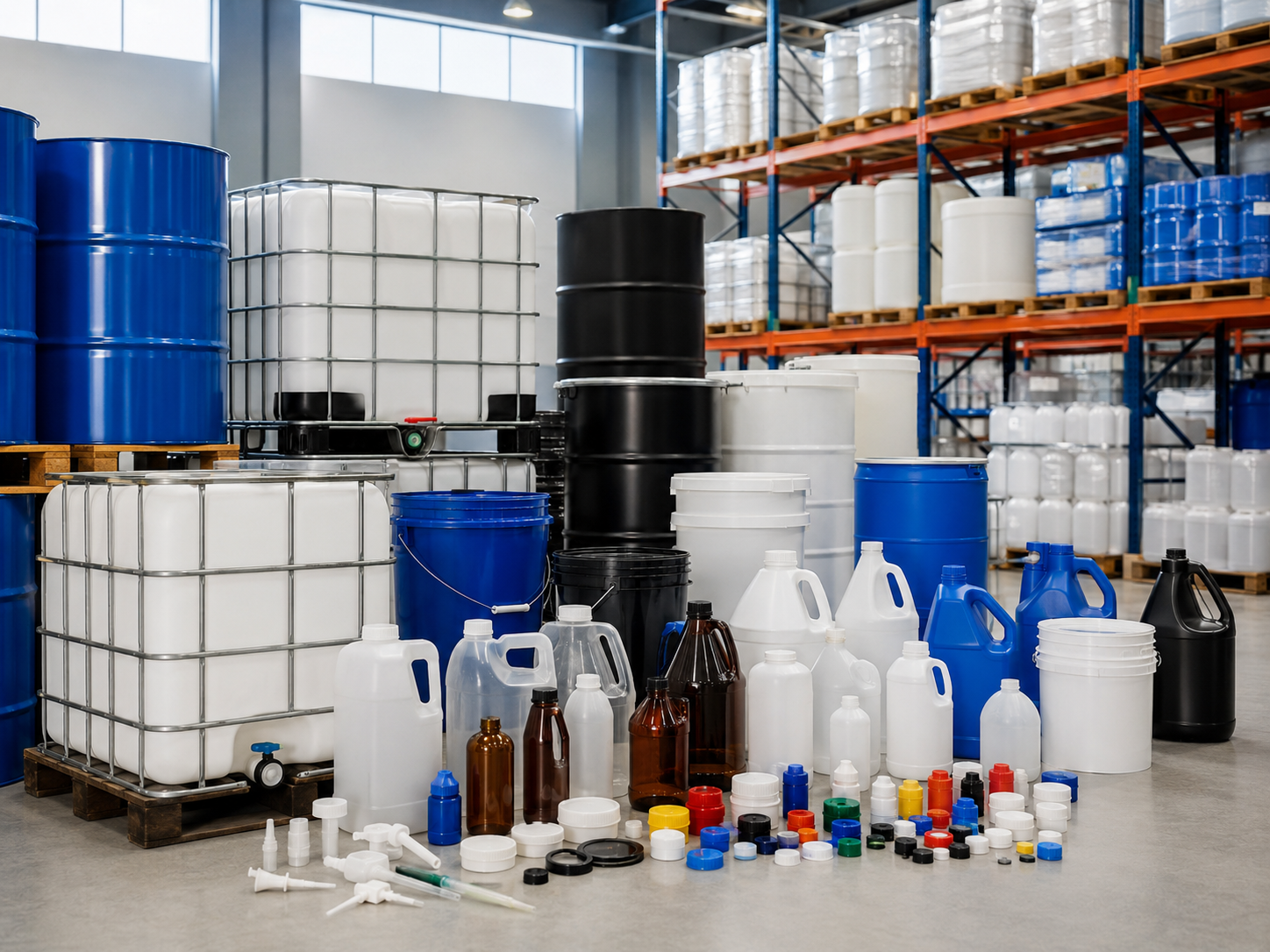
Choosing the right packaging material is not always a simple matter of finding a container that fits your product. For manufacturers, packaging decisions now affect product protection, transportation performance, regulatory compliance, sustainability goals, fill-line efficiency, inventory planning, and total cost of ownership.
Whether you are packaging industrial chemicals, paints and coatings, food ingredients, beverages, lubricants, agricultural products, or specialty consumer goods, the material you choose can directly influence how safely and efficiently your product moves through the supply chain.
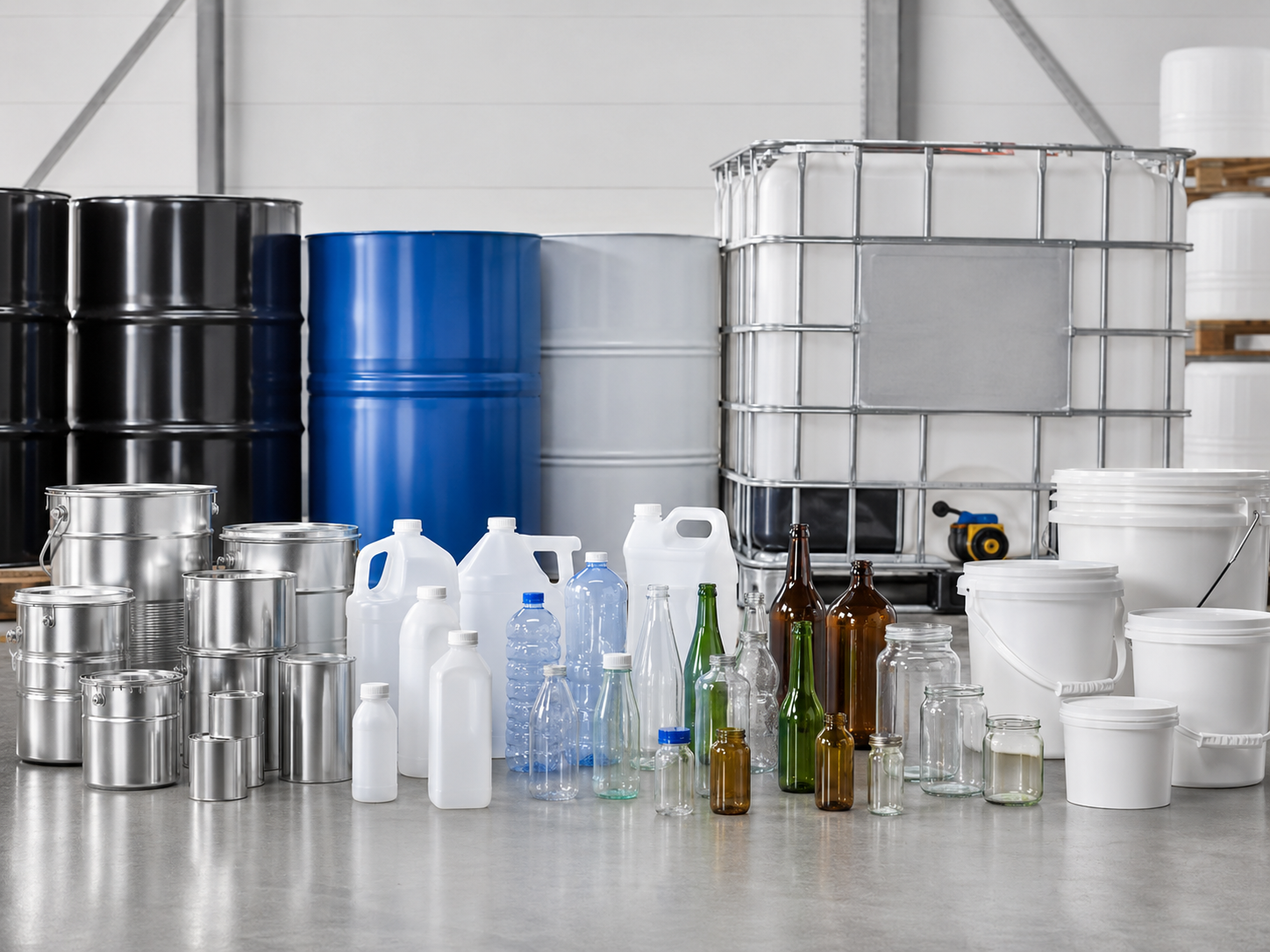
Metal, plastic, glass, and flexible packaging each offer distinct advantages. The right choice depends on your product chemistry, distribution model, regulatory requirements, brand priorities, and operational needs.
Novvia Group helps manufacturers evaluate these tradeoffs every day. Through its network of packaging companies, Novvia supports customers across industrial, food and beverage, chemical, coatings, pharmaceutical, petroleum, and consumer product markets with a broad range of rigid packaging solutions, technical guidance, and reliable supply.
Packaging affects far more than how a product looks on a shelf or ships to a customer. For manufacturers, packaging material selection can influence:
A container that performs well in one application may fail in another. For example, a lightweight plastic container may reduce freight costs, but it may not provide the same oxygen or UV barrier protection as metal or glass. A glass bottle may support premium brand perception and product purity, but it can increase shipping weight and breakage risk. A tin can may provide excellent durability for paints and coatings, but the product formula still needs to be evaluated for compatibility with the container, liner, closure, and storage conditions.
This is where Novvia Group’s packaging expertise becomes valuable. Instead of treating packaging as a commodity purchase, Novvia helps manufacturers evaluate the full packaging system: material, container style, closure, liner, label, handling requirements, compliance needs, and supply availability.
Metal packaging includes steel cans, aluminum cans, tinplate containers, steel drums, aluminum bottles, and specialty metal packaging formats. It remains a trusted option across industrial and consumer markets because of its strength, barrier protection, recyclability, and long history of reliable performance.
Metal packaging is commonly used for:
One of the greatest advantages of metal packaging is barrier protection. Metal can help protect products from oxygen, moisture, UV light, contamination, and environmental exposure. This makes it especially valuable for products that require long shelf life, chemical stability, or protection from light-sensitive degradation.
Metal also performs well in demanding supply chain environments. Steel and aluminum containers can provide strong puncture resistance, stackability, and structural integrity during storage, palletizing, and transportation. For manufacturers shipping products through industrial distribution channels, durability can reduce product loss, damage claims, and operational disruption.
From a sustainability perspective, metal packaging also has a strong story. Steel and aluminum are widely recycled, and metal can often be recycled repeatedly without significant loss of quality. For manufacturers looking to support circular packaging initiatives, metal may be an attractive option when paired with the right product and distribution model.
For paint and coating manufacturers, metal cans remain a common and effective choice because they offer strong barrier performance, stackability, and compatibility with many coating products. Manufacturers can explore related options through Novvia’s Paint & Coating Packaging Solutions.
However, metal is not automatically the best choice for every application. Product compatibility, corrosion potential, lining requirements, container weight, and cost should all be considered. For certain corrosive chemicals or products requiring squeeze, visibility, or lightweight handling, plastic may be the better material.
Plastic packaging is one of the most versatile packaging categories available to manufacturers. Plastic containers can be engineered in many shapes, sizes, colors, and resin types, making them useful across industrial, food, personal care, agricultural, household, automotive, and chemical markets.
Common plastic packaging materials include:
Plastic packaging is often selected for its lightweight construction, cost efficiency, impact resistance, and design flexibility. Compared to metal or glass, plastic can reduce freight weight, improve handling ergonomics, and support custom container shapes.
For many industrial products, HDPE is especially valuable because of its broad chemical resistance and durability. HDPE bottles, jugs, drums, and pails are often used for cleaners, additives, agricultural chemicals, automotive fluids, and industrial liquid products. Plastic drums can also be an effective option where corrosion resistance is required or where metal may not be compatible with the product.
PET, by contrast, is often selected when clarity and retail presentation matter. It is commonly used for food, beverage, personal care, and consumer products where product visibility and shelf appeal are important.
Polypropylene may be used when heat resistance, flexibility, or closure compatibility is a priority.
The main challenge with plastic packaging is that not all plastics behave the same way. A container that works for one chemical formula may not work for another. Manufacturers should evaluate chemical compatibility, permeability, temperature exposure, drop performance, closure fit, and storage duration before committing to a container.
Sustainability can also be more nuanced with plastic. Plastic packaging may reduce transportation emissions because it is lightweight, but recyclability, recycled content, resin availability, and end-market recovery infrastructure all matter. In some cases, post-consumer recycled resin or lightweighting may support sustainability goals, but performance and compliance requirements should come first.
Novvia Group can help manufacturers evaluate plastic containers across bottles, jugs, pails, drums, IBC totes, closures, and accessories. For chemical applications, see Novvia’s Industrial Chemical Packaging Solutions.
Glass packaging is often selected when product purity, flavor preservation, visual appeal, and premium perception are priorities. It is widely used in food, beverage, flavoring, pharmaceutical, wellness, and specialty consumer product markets.
Glass packaging is commonly used for:
The primary advantage of glass is that it is chemically inert. It does not easily interact with the product inside, which makes it useful for products where flavor, aroma, purity, or formula stability are critical. Glass also provides strong barrier protection and can support premium shelf presentation.
For food and beverage brands, glass often communicates quality. The weight, clarity, shape, and closure system can all contribute to how consumers perceive the product. For specialty flavorings, sauces, and premium beverages, that perception can be a major part of the packaging decision.
Glass is also recyclable and can support sustainability positioning, particularly in markets where glass recovery infrastructure is strong.
However, glass has practical limitations. It is heavier than plastic and many metal formats, which can increase freight costs. It is also breakable, which creates additional considerations for secondary packaging, warehouse handling, pallet configuration, and e-commerce fulfillment.
Manufacturers evaluating glass should consider not only the primary container, but also the full packaging system: closures, liners, cartons, dividers, pallets, and shipping conditions.
For food and specialty ingredient manufacturers, Novvia’s Food & Flavorings Packaging Solutions can help identify packaging formats that support product protection, food-contact requirements, shelf presentation, and distribution needs.
Flexible packaging and composite packaging can provide advantages when lightweight shipping, reduced material usage, and shelf efficiency are priorities. These formats may include pouches, laminated films, bags, liners, and multi-layer packaging systems.
Flexible packaging is especially common in food, consumer goods, powders, refills, and certain specialty product applications. It can reduce package weight, lower transportation costs, and minimize material usage compared to some rigid formats.
However, flexible packaging does not always provide the same structural protection as rigid containers. For industrial products, hazardous materials, heavy liquids, or products requiring stacking strength, rigid packaging is often the better option.
Manufacturers should evaluate flexible packaging based on product compatibility, puncture resistance, barrier requirements, filling equipment, shelf-life expectations, and customer use case.
Different industries prioritize different packaging requirements. This is why there is rarely one universal “best” packaging material.
Paint and coating manufacturers often prioritize leak resistance, barrier protection, stackability, and compatibility with waterborne or solvent-based formulas. Metal cans are widely used because they provide strong protection and familiar handling across retail and professional channels. Plastic pails may be preferred for larger volumes, job-site use, or specific product types.
Industrial chemical packaging requires careful evaluation of product compatibility, hazardous material requirements, transportation safety, and closure performance. Steel drums, plastic drums, HDPE bottles, jerricans, pails, and IBC totes may all be appropriate depending on the product chemistry, volume, and regulatory classification.
Food and flavoring manufacturers often need packaging that protects freshness, flavor, aroma, and food safety. Glass, PET, HDPE, tinplate, and aluminum may all be used depending on the product. Food-contact compliance, closure liners, tamper evidence, and shelf appeal are key considerations.
Beverage packaging decisions often involve both performance and brand perception. Aluminum cans offer recyclability, lightweight distribution, and strong barrier protection. Glass bottles support premium positioning and flavor preservation. Plastic may be used for certain functional beverages, juices, and high-volume products.
Petroleum and lubricant packaging often requires strong chemical compatibility, secure closures, and durable handling. Steel drums, HDPE drums, utility jugs, pails, and IBC totes are common, depending on volume and product type.

Sustainability is now a top consideration in packaging strategy. It is part of many companies' corporate ESG goals, as well as consumer preference, but it should be evaluated carefully. The most sustainable packaging choice is dependent on a variety of factors and is not always the one that sounds best in a marketing claim.
Manufacturers should consider:
For example, metal may offer strong recyclability and material recovery. Plastic may reduce freight weight and transportation emissions. Glass may support reuse and premium sustainability perception, but can increase shipping weight. Flexible packaging may reduce material use, but may have more limited recovery options.
A credible sustainability strategy should balance environmental goals with product protection and operational performance. Packaging that fails, leaks, breaks, or causes product waste can create a larger environmental and financial problem than the material choice alone.
Novvia Group can help manufacturers evaluate practical sustainability options, including recyclable materials, lightweighting, reconditioned bulk containers, reusable packaging programs, and packaging consolidation strategies.
When comparing metal, plastic, glass, or flexible packaging, manufacturers should ask seven key questions.
1. What is the product chemistry?
The packaging material must be compatible with the product. Chemical resistance, corrosion risk, flavor interaction, and formula stability should be reviewed before selecting a container.
2. What kind of protection does the product need?
Some products require protection from oxygen, moisture, UV light, contamination, or temperature changes. Barrier requirements often influence whether metal, glass, plastic, or a multi-layer system is appropriate.
3. How will the product be filled?
Automated fill lines may require specific container dimensions, wall strength, neck finishes, closure systems, or tolerances. A container that works manually may not perform well on high-speed equipment.
4. How will the package be transported and stored?
Stacking loads, pallet patterns, drop performance, warehouse conditions, and freight distance can all affect material selection.
5. Does the product have regulatory requirements?
Food-contact packaging, hazardous materials, pharmaceuticals, agricultural chemicals, and child-resistant packaging may all require specific documentation, testing, or certifications.
6. What is the true cost of the packaging?
Unit price is only one part of the equation. Manufacturers should also consider freight, damage rates, storage efficiency, downtime risk, fill-line performance, and supply availability.
7. Can the supplier support long-term availability?
A technically perfect container is not useful if it is not available when production needs it. Supply continuity, regional inventory, stocking programs, and supplier reliability should be part of the decision.
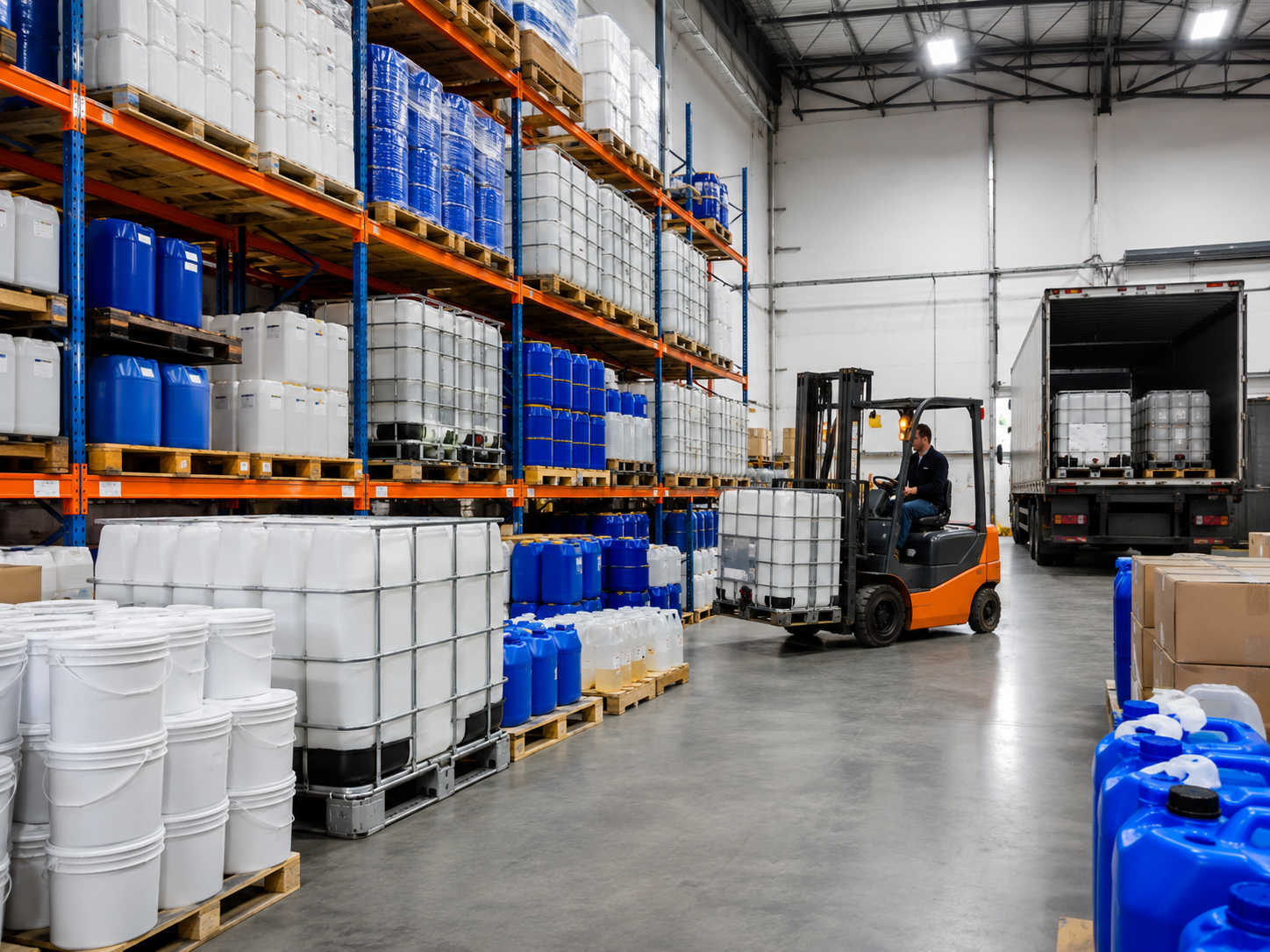
As packaging decisions become more complex, manufacturers need more than a catalog of containers. They need a packaging partner that understands materials, products, regulations, supply chains, and operational realities.
Through C.L. Smith’s HAZPlus® hazardous material packaging capabilities, Novvia also supports certified hazmat packaging with in-house UN/ISTA performance testing, including evaluations such as drop, vibration, stacking, hydrostatic pressure, and condensation testing for corrugated materials. HAZPlus is described as a self-certifier with its own UN/ISTA Package Testing Facility, supporting both new and re-certification performance testing.
Novvia Group brings together a family of specialized packaging companies with broad product access, technical knowledge, and regional distribution support. This allows Novvia to help customers source packaging across categories while also supporting material selection, compatibility review, closures, accessories, inventory planning, and supply continuity.
For manufacturers managing multiple SKUs, facilities, product lines, or regulatory requirements, working with a packaging partner can simplify procurement and reduce risk. Instead of evaluating metal cans, plastic bottles, glass jars, drums, pails, IBCs, and closures separately, manufacturers can work with Novvia to build a packaging strategy around the product, operation, and customer need.
The best packaging material depends on the chemical formula, concentration, storage duration, shipping requirements, and regulatory classification. HDPE, steel, plastic drums, metal cans, pails, and IBC totes may all be appropriate depending on the application. Chemical compatibility testing is strongly recommended.
Metal packaging often has strong recyclability and can be recycled repeatedly, but sustainability depends on the full lifecycle. Plastic may offer transportation efficiency because it is lightweight. The best choice depends on product protection, recovery infrastructure, shipping distance, recycled content, and reuse potential.
Plastic may be the better option when lightweight handling, corrosion resistance, design flexibility, impact resistance, or lower freight weight are priorities. It is commonly used for industrial liquids, cleaners, agricultural chemicals, food products, and automotive fluids.
Glass is often preferred for premium presentation, flavor preservation, and chemical inertness. Plastic may be preferred for lightweight shipping, impact resistance, squeezability, and high-volume production. The right choice depends on the product, brand positioning, filling process, and distribution channel.
Metal and glass generally provide very strong barrier protection against oxygen, moisture, and UV exposure. Some plastic packaging can also provide strong protection, especially when engineered with barrier layers or specialty resins.
Before switching materials, manufacturers should evaluate product compatibility, fill-line performance, regulatory requirements, shelf life, customer expectations, freight costs, closure compatibility, and supplier availability.
Choosing between metal, plastic, glass, and other packaging materials is a strategic decision that affects product quality, cost, compliance, sustainability, and supply chain reliability.
Novvia Group helps manufacturers compare packaging options and source the right solution for their product, operation, and market. Whether you need metal cans, plastic bottles, glass containers, pails, drums, IBC totes, closures, or specialty packaging support, Novvia’s network of packaging experts can help you make a confident decision.
Need help comparing packaging materials? Request a quote from Novvia Group to find the right packaging solution for your product.